
Key facts: Spring Creek
- Homes along natural drainages sit lower than surrounding ground and receive runoff.
- Groundwater near drainages tends to rise in spring and after storms.
- Crawlspaces can collect standing water that raises humidity in the house above.
- Water entering from outside is generally treated as contaminated by restoration contractors.
- Proper grading and drainage reduce how much water reaches a foundation.
In this page
- 1The area
- 2Common water problems
- 3Crawlspaces
- 4When water gets in
- 5Water source and likely cleanup
- 6Insurance
- 7Reading the lot
- 8Older and newer homes side by side
- 9Moisture, smell and air quality
- 10Seasonal risk near the drainage
- 11Working with neighbors
- 12Questions to ask on the call
- 13What a contractor does first in a low-lying home
- 14Mold risk in damp areas
- 15After the cleanup
- 16More Spring Creek questions answered in detail
- 17A year of water near the drainage
- 18How cleanup here differs from higher ground
- 19What to tell the contractor when you call
- 20Buying near the drainage
- 21Who else may be involved
- 22Calling at any hour
- 23Trees and older sewer lines
- 24The bottom line
- 25Help for Spring Creek homeowners
- 26Spring Creek questions
About the area
The area
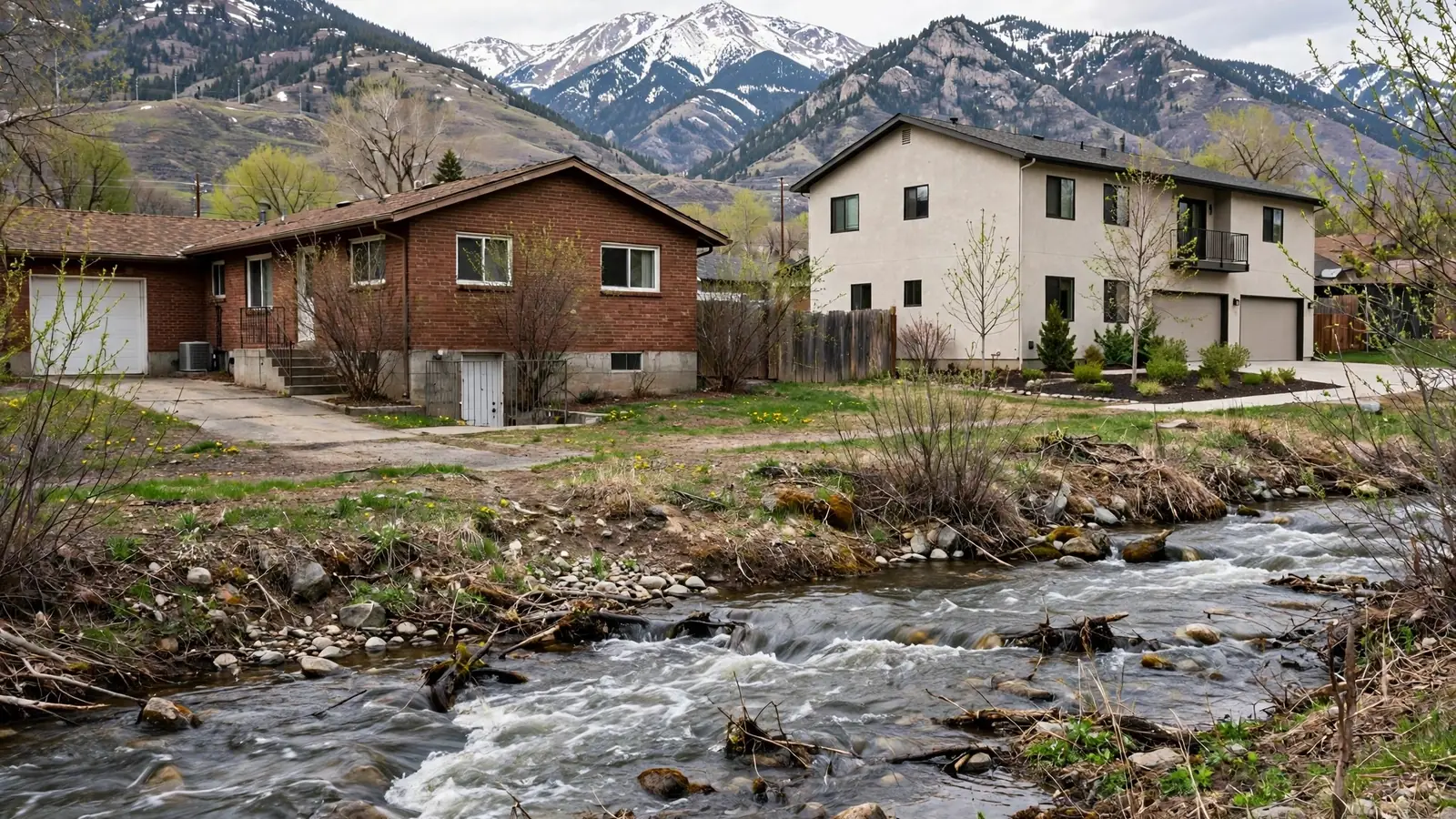
Spring Creek is a residential area in Springville that takes its name from the spring-fed creek and drainage running through it. Homes range from older houses with crawlspaces or partial basements to newer infill. The common thread is the lower ground: water from the surrounding area drains this way, and the soil near the creek stays wetter than higher ground.
For homeowners, that means groundwater and runoff are the main concerns, particularly in spring and during heavy summer storms.
Problems
Common water problems
- Seasonal seepageGroundwater rises in spring and seeps into basements and crawlspaces.
- Crawlspace standing waterWater pools on crawlspace soil, raising humidity and wetting floor framing.
- Storm runoffHeavy storms send water across low lots toward foundations.
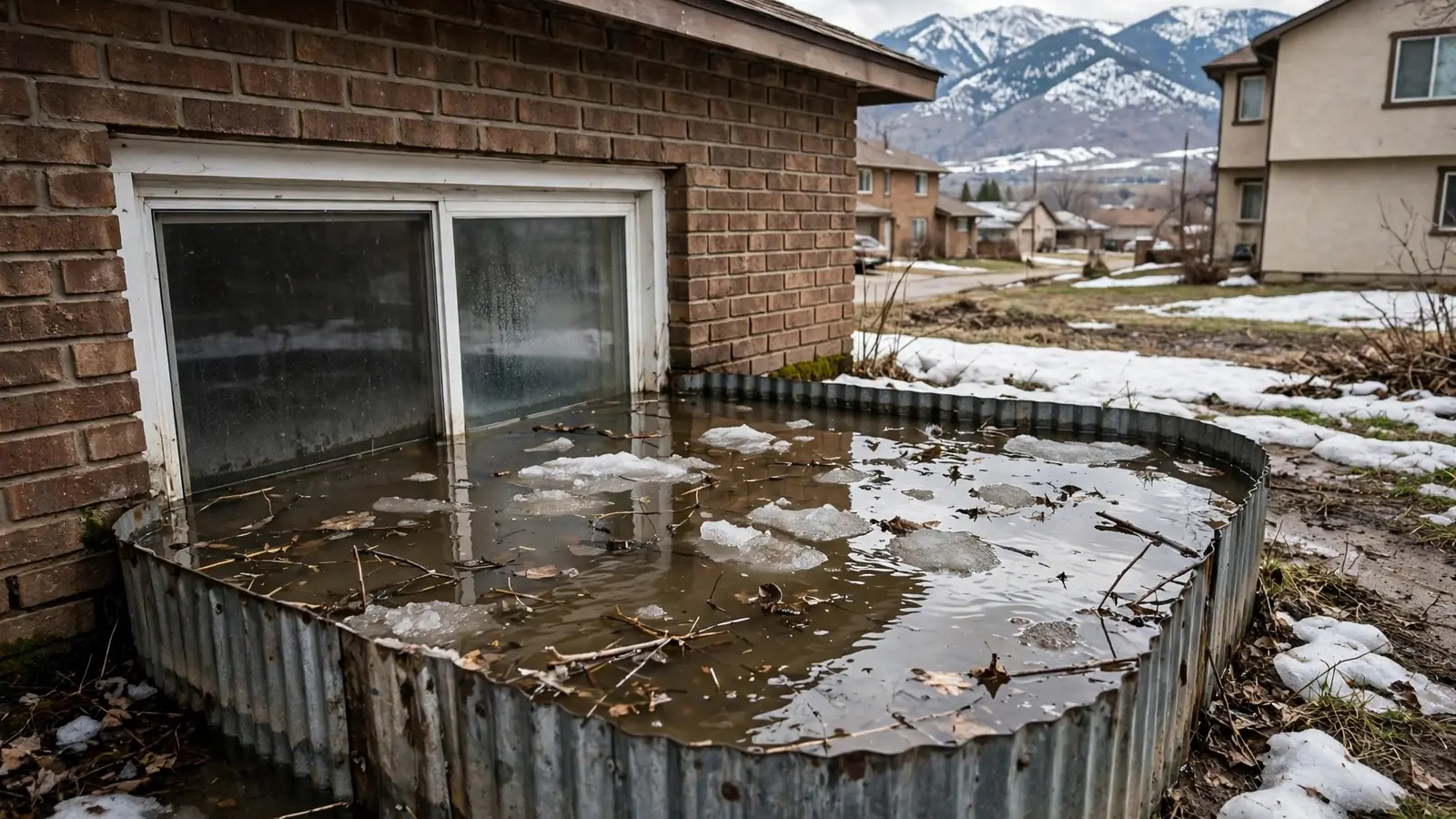
- Window wellsLow-lying wells fill and overflow.
- Sump overflowPumps that cannot keep up in wet periods overflow.
- Plumbing leaksOrdinary pipe and appliance leaks, made worse by already damp conditions.
Crawlspaces
Crawlspaces
Older homes in the area often have crawlspaces rather than full basements. A crawlspace with bare soil and poor drainage can hold standing water after storms or in wet springs. That water raises humidity under the house, can wet floor joists and insulation, and leads to musty smells and mold on framing.
Cleanup involves pumping out standing water, removing wet insulation and debris, and drying the space with dehumidifiers. Long-term fixes, such as a vapor barrier over the soil, better drainage and in some cases a sump pump, are jobs for a foundation or waterproofing contractor.
Response
When water gets in
- 1
Find the route
Is it coming up through the floor, in through a well or from a pipe?
- 2
Stop what you can
Shut off internal water sources; pump or bail a flooded well.
- 3
Protect contents
Lift furniture and move boxes off the floor.
- 4
Photograph
Record water levels and damaged items.
- 5
Call
Outside water usually needs material removal, cleaning and professional drying.
Cleanup
Water source and likely cleanup
| Source | Water category | Typical cleanup |
|---|---|---|
| Burst pipe | Clean | Extraction and drying; pad replaced |
| Groundwater seepage | Contaminated | Pad and lower drywall removed |
| Storm runoff | Contaminated | Removal, cleaning and drying |
| Crawlspace flooding | Contaminated | Pump-out, insulation removal, drying |
Coverage
Insurance
Groundwater and surface water are commonly excluded from homeowners policies without flood coverage or specific endorsements. Pipe leaks are treated differently. Check your policy and talk to your agent about flood insurance if your lot sits low near the drainage.
Site drainage
Reading the lot
Before anything else, it helps to look at how water moves across your own property. Stand in the yard during a heavy rain or a fast thaw and watch where water runs. On many lots near the Spring Creek drainage, the answer is obvious: it flows toward the lowest corner, and if the house sits in the way, it collects against the foundation. Downspouts that empty onto flat ground, patios that tilt toward the house and planting beds edged so they trap water all make it worse.
Low lots also tend to have wetter soil for longer. Clay-rich soils common in parts of Utah County hold water and swell, then shrink as they dry. That movement can open small gaps where walls meet slabs, and those gaps become paths for water the next time the ground is saturated. None of this is unusual, but it means a basement here may take water in conditions that would leave a house on higher ground dry.
A restoration contractor sees the inside of the problem: where the water came in, how high it rose and how long it sat. That information is useful to whoever later works on grading, gutters or drains, so keep the contractor's photos and notes.
Housing mix
Older and newer homes side by side
The area mixes houses from different decades. An older home may sit on a shallow foundation with a crawlspace or a partial basement dug later, with original galvanized supply lines and a clay sewer lateral. A newer infill house next door may have a full basement, plastic pipes, a perimeter drain and a sump pump. They share the same groundwater, but they fail in different ways.
In older homes the usual calls are about seepage through older walls, crawlspace water and leaks from aging pipes. In newer homes they are more often about a sump pump that stopped, a window well without a working drain or a fitting that let go. The cleanup principles are the same, but knowing the age and construction of the house helps the contractor plan before they arrive, so mention it on the call.
Indoor moisture
Moisture, smell and air quality
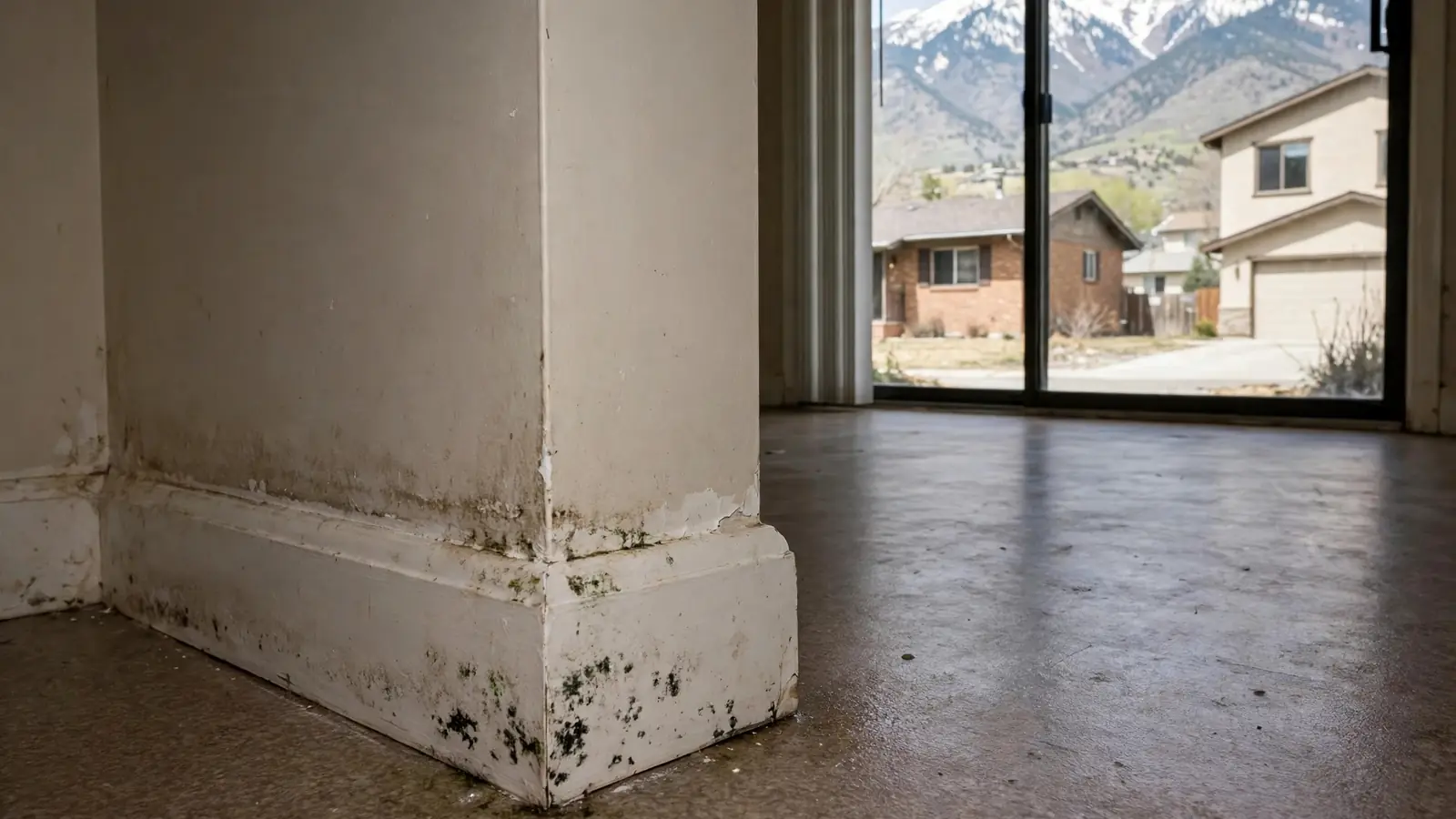
Homes near wet ground often have a background moisture problem even without a flood. Basements and crawlspaces stay a little damp, and that dampness carries a musty smell up into the living space through gaps around pipes, ducts and floor framing. After a water event, that background dampness makes drying slower and mold more likely.
The EPA's general advice is to keep indoor humidity low, ideally below about 60 percent, and to fix moisture sources quickly. In a damp basement that may mean running a dehumidifier through the wet months, sealing crawlspace soil with a vapor barrier and making sure dryer vents and bathroom fans exhaust outside. These are small steps, but they reduce the odds that a minor leak turns into a mold problem.
Seasons
Seasonal risk near the drainage
| Season | Typical issue |
|---|---|
| Late winter | Snow piled against foundations and in window wells |
| Spring | Snowmelt and rising groundwater; seepage through slabs |
| Summer | Thunderstorm runoff and irrigation leaks |
| Autumn | Leaf-clogged drains and wells before winter |
| Winter | Frozen pipes and discharge lines |
Shared water
Working with neighbors
Water does not stop at property lines. On a low street, runoff from several yards can end up at one house. Sometimes the fix is a shared one: a swale along a fence line, a coordinated downspout plan, or clearing a drainage path that runs behind several lots. Talking with neighbors about where water goes in a storm is often more productive than fixing one house in isolation. If a city storm drain or ditch seems to be the problem, Springville City Public Works is the place to report it.
Ask
Questions to ask on the call
- Do you see much groundwater seepage in this part of Springville?
- Will you need to remove the carpet pad and lower drywall?
- How will you dry the crawlspace if water reached it?
- Do you take daily moisture readings and share the log?
- Can you note where the water came in for my drainage contractor?
- What licences, certifications and insurance do you carry?
First visit
What a contractor does first in a low-lying home
When a contractor arrives at a wet house near the drainage, the first question is whether water is still coming in. If groundwater is still rising through the slab, extracting it will only buy a few hours; the plan then focuses on protecting contents, lowering the water steadily and preparing to dry once inflow stops. If the source was a storm or a pipe and has stopped, they can move straight to extraction and removal.
Next comes moisture mapping. In a low home, moisture often reaches further than expected because the soil around and under the house was already damp. Readings are taken along every exterior wall, under flooring and at the bottom plates of interior walls. Crawlspace framing is checked from below. The map tells the contractor how much material must come out and how big the drying setup needs to be.
Finally they look at airflow. Low houses with small basement windows and crawlspaces have limited ventilation. Contractors may seal off the wet area, run dehumidifiers continuously and, in a crawlspace, use ducting to push dry air under the house. Good airflow planning shortens the job by days.
Mold
Mold risk in damp areas
Mold needs moisture, and homes near wet ground start with more of it. That is why speed matters even more here than elsewhere. A leak that might dry harmlessly in a house on high ground can tip a damp basement into visible mold growth within days. The EPA's guidance is to dry wet materials within 24 to 48 hours; in a house that is already damp, aim for the short end of that range. [2]
If mold is already present when walls or floors are opened, the work changes. Affected materials are removed under containment, surfaces are cleaned and the area is dried. Small areas can sometimes be handled by homeowners following EPA guidance, but larger areas, or mold inside walls and crawlspaces, are usually left to professionals.
Talk to a local contractor
Questions about spring creek?
One call connects you with an independent water damage restoration contractor who serves Springville.
Prevention
After the cleanup
Once the house is dry, it is worth thinking about the next wet season. Simple improvements, such as extending downspouts, regrading soil, adding window-well covers and testing the sump pump, take little effort and address the most common routes water takes. Larger fixes, such as interior drain tile, a new sump system or crawlspace encapsulation, are bigger projects but may be worth it for homes that take water every spring.
Keep a simple record of each water event: date, where water came in, how high it rose, what was damaged. Over a few years that record shows patterns, and it gives any drainage contractor much better information than memory alone.
Questions
More Spring Creek questions answered in detail
My basement only gets wet every few years. Is it worth fixing the drainage?
It depends on what the water damages when it comes. If the basement is unfinished concrete, an occasional damp patch may be acceptable. If it is finished with carpet, drywall and furniture, each event can mean days of drying and removal of materials. Simple fixes such as downspout extensions, regrading and well covers are easy protection. Larger drainage projects deserve a proper assessment by a drainage or foundation contractor who can look at how water moves around your lot.
How can I tell if water is coming up through the floor or in through the wall?
Look at where the water first appears and how it spreads. Water rising through the slab often shows as dampness in the middle of the floor or along cracks, sometimes with no clear entry point. Water coming through a wall usually appears at the base of that wall first, often below a window well or downspout. A contractor's moisture readings across the floor and up the walls can make the pattern clear.
Can I use a shop vacuum while waiting for help?
For clean water on a concrete floor, a wet-dry shop vacuum can remove some water if there is no electrical hazard, the vacuum is plugged into a ground-fault protected outlet and you are standing somewhere dry. Do not use one on sewage, and do not use a household vacuum at all. Extraction equipment removes far more water from carpet than a shop vacuum can.
Will a dehumidifier I already own help?
Yes, a household dehumidifier helps keep humidity down in a damp basement, especially before and after a water event. It is not enough to dry a soaked basement, which usually needs commercial units with much greater capacity, but running yours while you wait for help does no harm.
What happens to the carpet in a crawlspace home?
In homes with a crawlspace rather than a basement, the main floor carpet may be over a wood subfloor. If water reaches it from above, it may be dried in place. If water rose from the crawlspace, the subfloor and joists below need drying from underneath as well, which the contractor will plan for.
Is it safe to stay in the house while the crawlspace dries?
Usually. Drying equipment in a crawlspace is out of the way. If contaminated water was involved, the contractor may seal off crawlspace access and vents into the house. Ask them about it on the call.
Through the year
A year of water near the drainage
January and February are about cold. Pipes in crawlspaces and exterior walls are at risk, and sump discharge lines can freeze solid where they leave the house, leaving the pump running against a blocked pipe. Check that discharge lines are clear and that crawlspace vents are closed during deep freezes if your home's design allows it.
March through May is the wet season near the drainage. Snow on surrounding slopes melts, the ground thaws and groundwater rises. This is when seepage through slabs and walls is most likely, when window wells fill and when sump pumps work hardest. Keep an eye on the basement after warm spells and storms, and keep belongings off the floor in rooms that have taken water before.
June through September brings irrigation and thunderstorms. Sprinklers and secondary water lines add water to the soil around foundations, and short, heavy storms can overwhelm gutters and street drains. October and November are the time to clean gutters, clear window wells of leaves and get the house ready before snow returns.
Differences
How cleanup here differs from higher ground
The cleanup steps are the same everywhere: stop the source, extract, remove what will not dry, dry what remains and verify. Near the drainage, three things change. First, the water is more often from outside, so more porous material is removed. Second, the starting moisture level of the house is higher, so drying takes longer and dehumidifiers matter more. Third, the source may return with the next storm or melt, so the contractor may advise holding off on reinstalling carpet and drywall until the cause is addressed.
That last point is worth taking seriously. Re-finishing a basement that floods every spring wastes effort and invites mold. It can make sense to leave walls open at the bottom, use water-tolerant materials, or fix drainage before refinishing.
On the call
What to tell the contractor when you call
- Your address and accessStreet address, gate codes or a steep drive, and where a crew can park in Spring Creek.
- Where the water came fromThe slab, a wall, a window well, the crawlspace or a pipe.
- Whether water is still coming inRising groundwater changes the plan.
- Crawlspace or basementAnd whether you have been able to look underneath.
- Any previous water eventsPatterns help the contractor plan.
Buying
Buying near the drainage
Homes near natural drainages often come with lovely mature trees and quieter streets. They also come with a higher chance of water in the basement or crawlspace. Before buying, check the FEMA flood map for the address, ask the seller about past water events, look for signs of seepage such as efflorescence and replaced lower drywall, and have an inspector check the crawlspace or basement carefully.
Ask for any records of past cleanups. A seller who had a basement dried properly and fixed the drainage afterwards is in a much better position than one who simply replaced carpet. Factor any needed drainage improvements into your plans, and talk with your insurance agent about flood and water backup coverage before closing.
Other help
Who else may be involved
Homes near the drainage often need a drainage or waterproofing contractor once the immediate damage is dealt with: someone to look at grading, perimeter drains, sump systems or crawlspace vapor barriers. If a city storm drain or ditch seems to be part of the problem, Springville City Public Works is the place to report it. A plumber may be needed if a pipe failure added to the water.
Around the clock
Calling at any hour
Groundwater and storm runoff do not wait for business hours, and low-lying homes often take water overnight after an evening storm. Calls through this site are answered at any hour and connected to an independent contractor serving Springville. Let them know whether water is still entering and whether it is coming through the floor, a wall or a window well. That helps them decide what to bring and what you can safely do in the meantime.
Trees and older sewer lines
Many lots along the drainage have large old trees that thrive on the extra moisture. Their roots extend widely and seek out water, including the small leaks at joints of older clay or cast-iron sewer laterals. Over time roots can fill a pipe and cause a backup through the basement floor drain. A camera inspection is a sensible step in an older home here, especially if drains have slowed.
Summary
The bottom line
Living near a drainage means respecting water. Keeping it moving away from the house, catching problems early and drying quickly when it does get in make all the difference. If water does get in, call early: the first day of drying shapes everything that follows, and the line is answered at all hours.
Getting help
Help for Spring Creek homeowners
Whether the water came from a pipe, an appliance, the ground or the sky, the steps are the same: stop it if you can, stay safe, photograph, protect belongings and call. An independent contractor familiar with Spring Creek and the rest of Springville can tell you on the call what to expect and how quickly drying can begin.
Questions
Spring Creek questions
Why is my crawlspace always damp?
Low lots near drainages have higher groundwater; a vapor barrier and drainage improvements help.
Is seepage covered by insurance?
Often not without specific coverage. Check your policy.
Can musty smells mean hidden water?
Yes. Persistent musty odors often point to moisture in crawlspaces or walls.